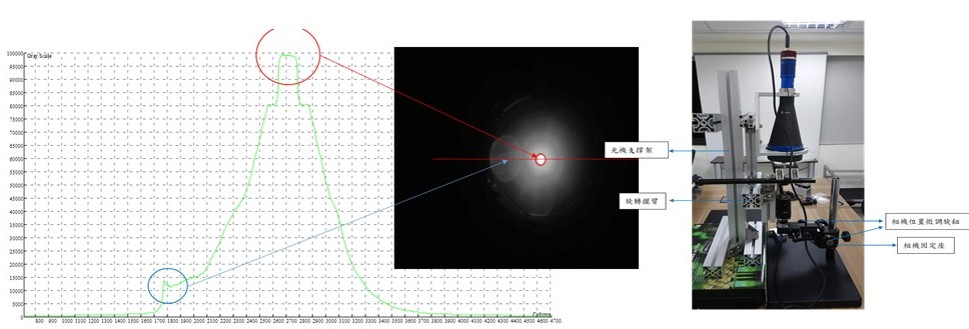
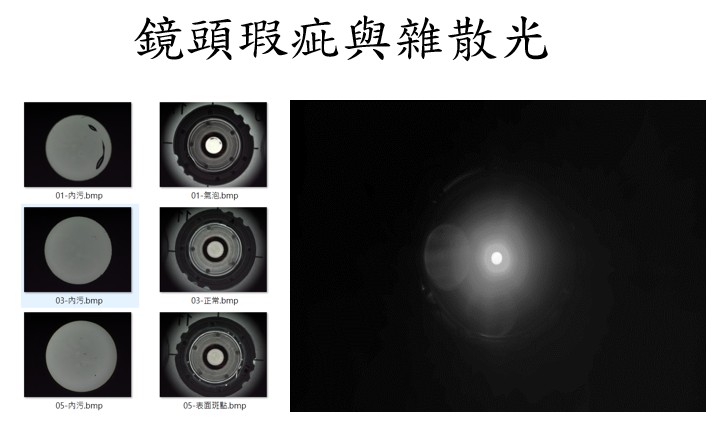
相機鏡頭光學品質( 雜散光 [Stray Light] 與 鬼影 [Ghost] )檢測 鏡頭雜散光(Lens Flare / Stray Light) 是評估成像品質的關鍵指標之一。雜散光會導致畫面對比度下降、出現光斑(Ghosting)或霧翳(Veiling Glare),嚴重影響鏡頭的性能。 此兩項瑕疵以往在手機鏡頭品質檢測中,幾乎是被忽略的品檢項目,但在 自動駕駛(車用)與 無人機(UAV)領域,雜散光(Stray Light)已不僅僅是影像美觀問題,而是直接威脅到安全性與功能可靠性的技術紅線。 1. 車用鏡頭:危及主動安全 (ADAS) 車用相機需要 24 小時面對極端光照(迎面車燈、夕陽、隧道出口)。 雜散光主要在以下情境造成風險: - 目標偵測失效 (Object Detection Failure): 當強烈雜散光(如光霧 Veiling Glare)覆蓋畫面時,影像對比度驟降,導致 AI 演算法無法識別行人、單車客或車道線,甚至發生誤判。
- 鬼影引發虛假目標 (Ghosting artifacts): 夜間對向車燈產生的「鬼影」可能被視覺演算法誤認為是實際存在的移動物體,觸發不必要的自動緊急煞車(AEB)。
- 動態範圍壓縮: 雜散光會佔據感測器的飽和容量,使得原本就處於陰影處的危險目標(如黑夜中的行人)完全淹沒在背景雜訊中。
2. 無人機:導航與任務障礙,無人機通常在高空作業,光路徑更為複雜,雜散光對其影響如下: - 避障系統 (Obstacle Avoidance) 失靈: 無人機的雙目視覺(Stereo Vision)依賴兩側影像的特徵匹配。若其中一個鏡頭出現強烈的眩光,會導致深度計算錯誤,使無人機無法準確判斷與障礙物的距離。
- 導航定位精度下降: 視覺里程計(Visual Odometry)依賴跟蹤影像中的地面特徵點。雜散光產生的光斑會覆蓋這些特徵,導致無人機在 GPS 訊號弱的環境下(如橋下或室內)發生飄移。
- 測繪與遙測誤差: 在農業或地形測繪中,光霧會導致顏色失真與反射率計算錯誤(例如 NDVI 植生指數計算不準),直接導致數據分析失敗。
- 雷射干擾風險: 無人機相機對強光極為敏感,雜散光抑制能力差的鏡頭更容易被地面雷射干擾(Laser Dazzling),導致畫面全白或感測器受損。
Optical Quality Inspection for Camera Lenses: Stray Light and Ghosting Lens Stray Light is one of the most critical indicators for evaluating imaging quality. It can lead to decreased contrast, the appearance of artifacts (Ghosting), or a foggy effect (Veiling Glare), all of which severely compromise lens performance. In the past, these two types of defects were often overlooked in smartphone lens quality control (QC). However, in the fields of Automotive (Autonomous Driving) and Unmanned Aerial Vehicles (UAVs), stray light has evolved beyond a mere aesthetic issue. It is now a critical technical barrier that directly threatens safety and functional reliability. 1. Automotive Lenses: Risks to Active Safety (ADAS) - Automotive cameras must operate 24/7 under extreme lighting conditions, such as oncoming high beams, sunset glare, and tunnel exits. Stray light poses risks in the following scenarios:
- Object Detection Failure: When intense stray light (such as Veiling Glare) blankets the image, the contrast drops sharply. This prevents AI algorithms from identifying pedestrians, cyclists, or lane markings, potentially leading to misidentification.
- False Targets from Ghosting: At night, "ghosting" caused by oncoming headlights may be misinterpreted by vision algorithms as actual moving objects, triggering unnecessary Automatic Emergency Braking (AEB).
- Dynamic Range Compression: Stray light occupies the sensor's saturation capacity, causing critical targets in shadows (such as pedestrians at night) to be completely submerged in background noise.
2. UAVs: Navigation and Mission Obstacles - Drones typically operate at high altitudes where light paths are more complex. The impacts of stray light include:
- Obstacle Avoidance System Failure: UAV stereo vision relies on feature matching between dual lenses. If one lens experiences intense glare, it can lead to depth calculation errors, rendering the drone unable to accurately judge distances to obstacles.
- Degraded Navigation and Positioning Accuracy: Visual Odometry depends on tracking ground feature points. Light spots from stray light can obscure these features, causing the UAV to drift in GPS-denied environments (e.g., under bridges or indoors).
- Mapping and Remote Sensing Errors: In agricultural or topographical mapping, veiling glare causes color distortion and reflectance calculation errors (e.g., inaccurate NDVI vegetation index), leading to failed data analysis.
- Laser Interference Risks: Drone cameras are extremely sensitive to high-intensity light. Lenses with poor stray light suppression are more vulnerable to Laser Dazzling from the ground, which can cause total image washout or sensor damage.
|